
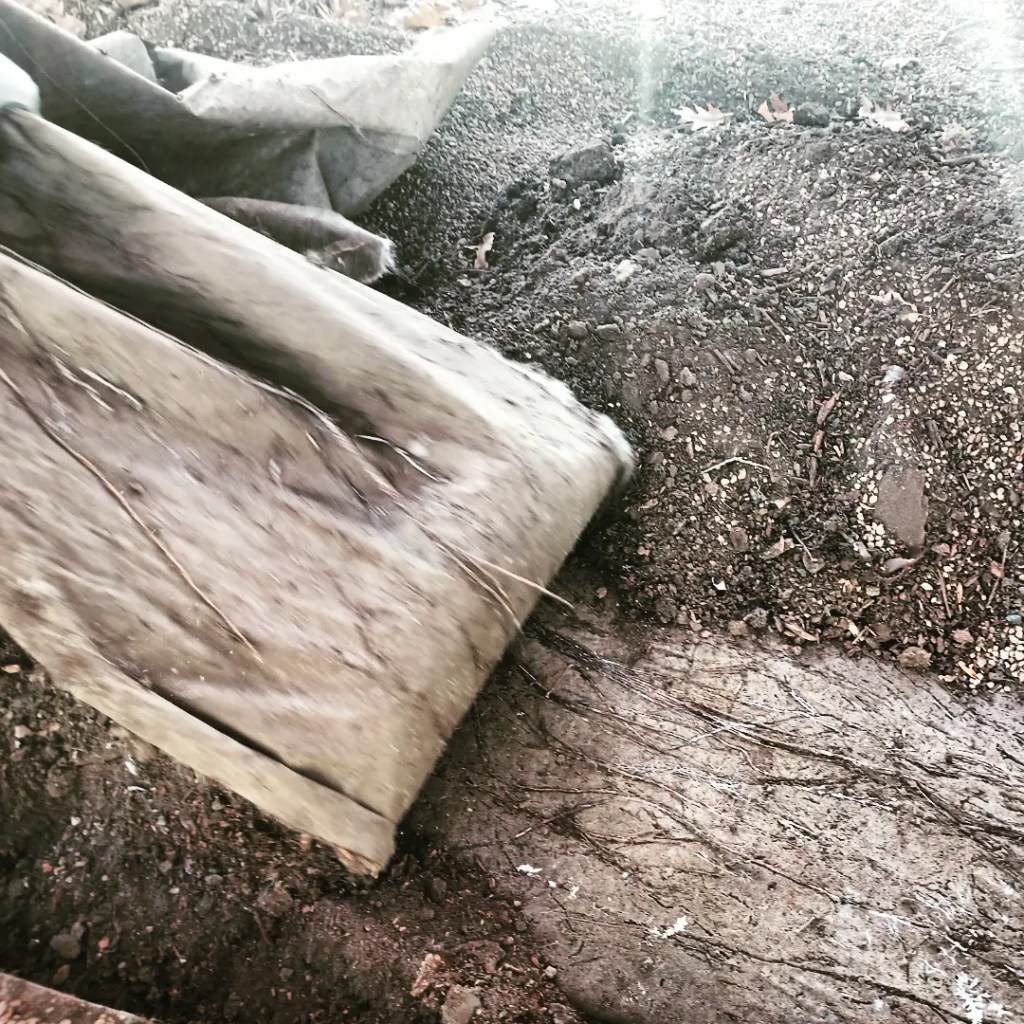
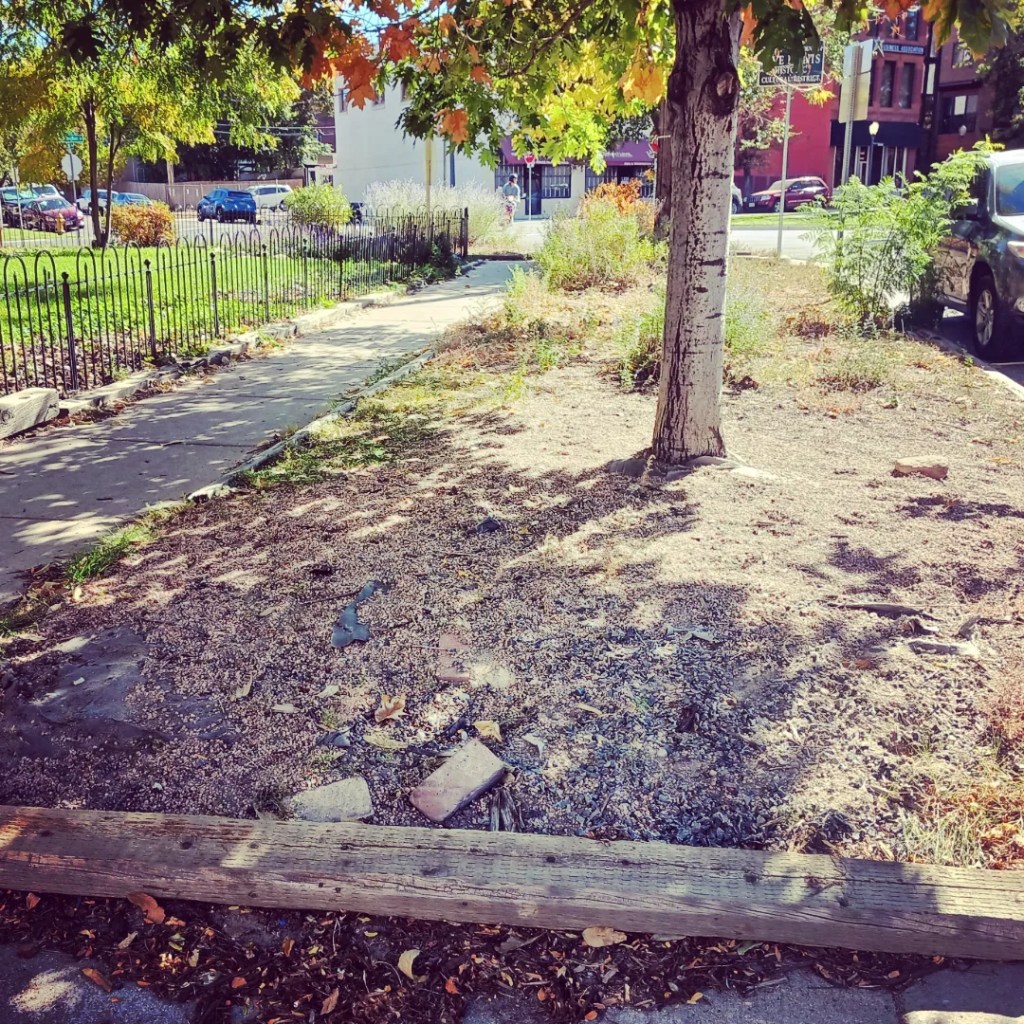
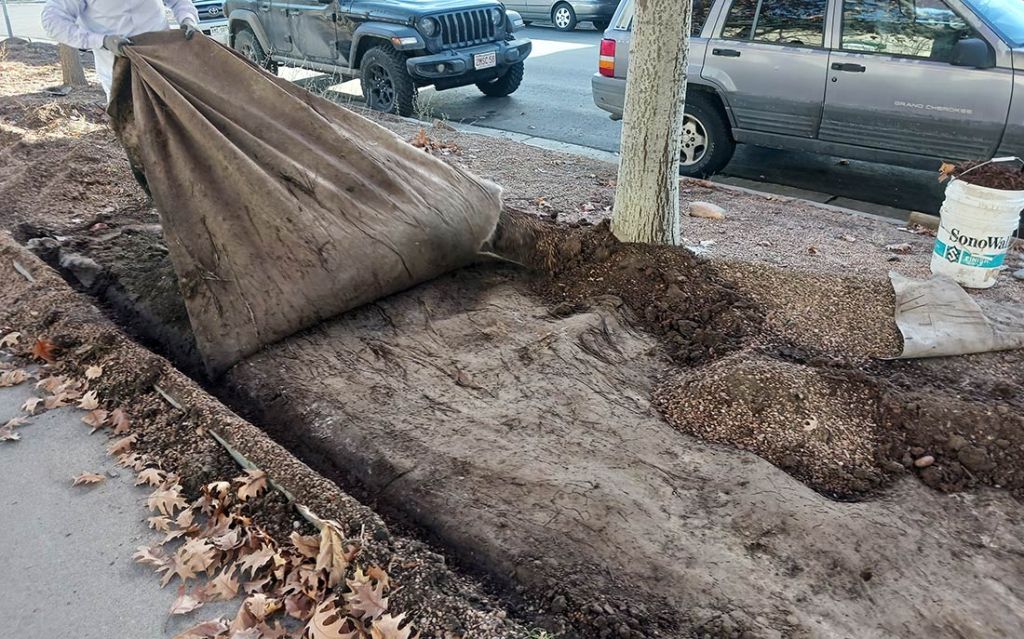
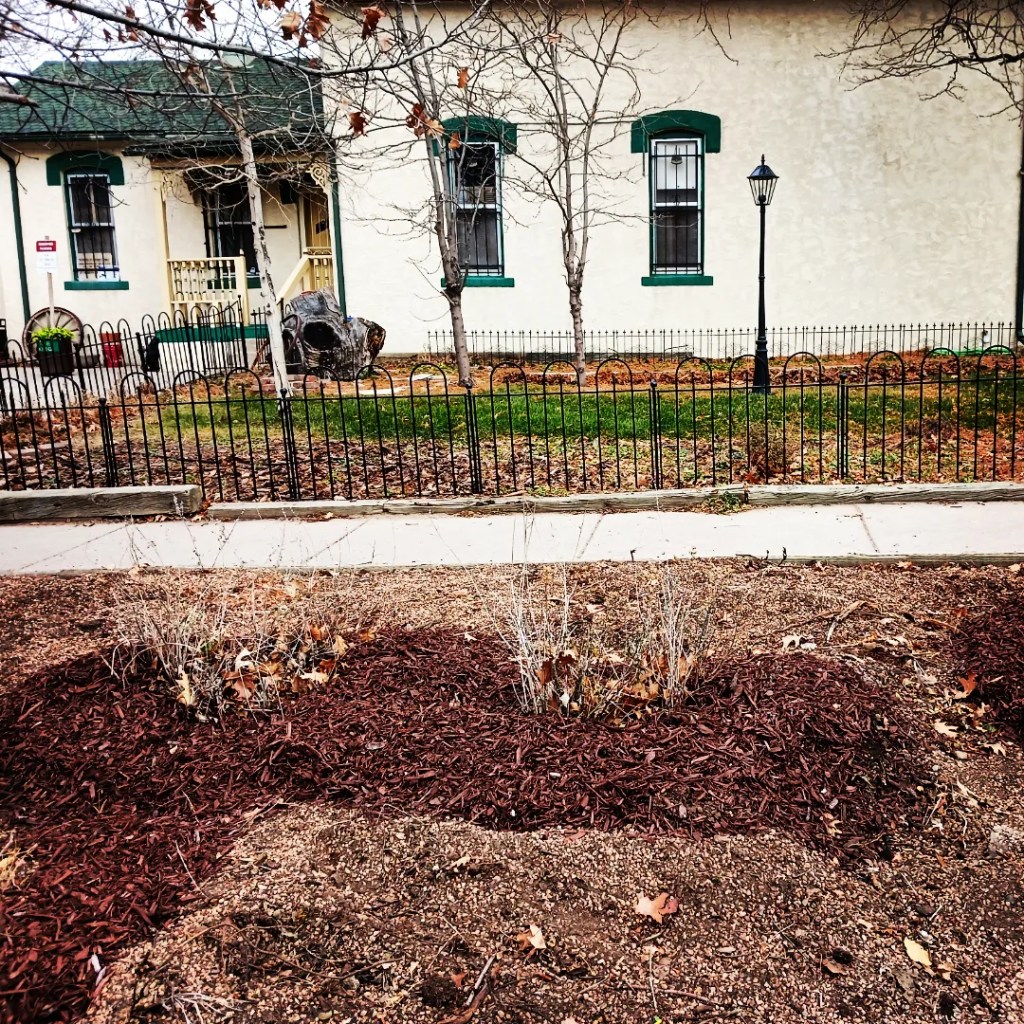
We could sense the relief of the soil as we opened it to the sky, moisture and fallen oak leaves. After receiving a grant from Denver Arts & Venues’ PS You Are Here program, we started restoring the land by tearing out the weed cloth that had smothered the soil for the past 30 years. Fortunately, every time a new layer of weed cloth was laid down, pea gravel was used to cover it. This meant that we had a nice mixture of decomposed fallen leaves, native soil and pea gravel that allows water to penetrate the ground and offer a good start for the deep roots set in by native plants.
The clay rich native soil had been sculpted by steps over the years. We found long tendrils of roots reaching out under the plastic cloth, seeking light in which to grow. These would burst into aromatic purple spires the following spring as if celebrating their newfound freedom. Clay is frustrating for many western gardeners as it easily becomes compacted. Denver is located across an ancient lake bed, so clay rich soil dominates our urban landscape. Clay is mineral rich and can maintain moisture, and is ideal for the native plants who have thrived here for ages. As we intend to cultivate a no-added-water garden in this area, our focus is on native species that have ties to local African American history.
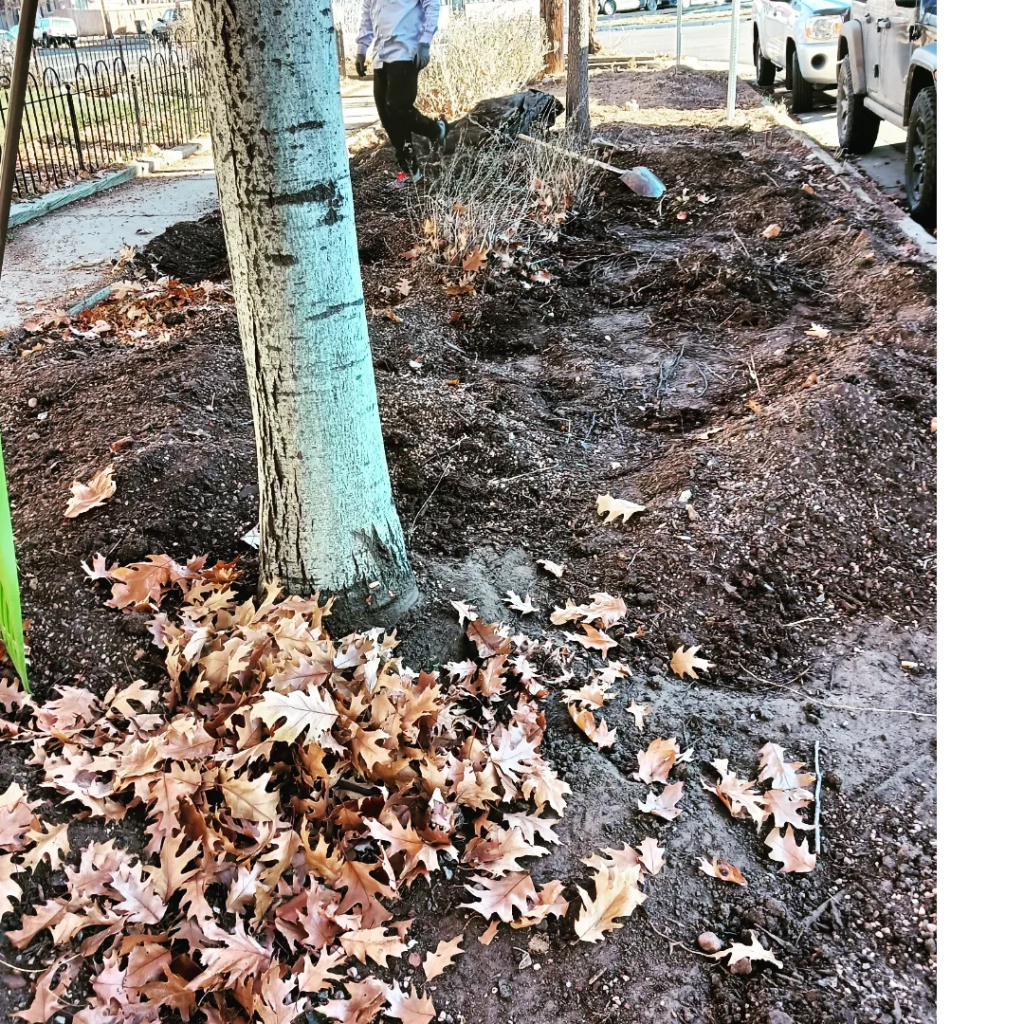
By December, leaves from the existing oak have largely fallen, offering nitrogen rich leaves to decompose, loosen the clay and fertilize the soil. When we go out to choose stone to install in the spring, we pick up a load of mulch to tuck around the bushes that we had planted with Grace in the early 1990’s. We celebrate their capacity to hold on despite the dry, stifling conditions they were subjected to for decades. At this point we let the ground rest.


 VOICES