

When considering the immediate needs of the space, the first and by far the most important issue we wanted to address was DOGS. Because there was nothing interfering their path, they would come out of the apartment buildings on Welton, head straight to the hell-strip and poop in the open ground. Unfortunately dog owners were not diligent about cleaning up the mess and it became a space that felt desecrated, unsanitary and simply gross.
However, our vision for the space included access, so we were not inclined to fence off the whole area. We wanted to invite slow investigations of the collections of plants that we were to be cultivating, and how they are woven into African American history. One theme that is of particular interest is collecting plants that were used as food and medicine by the African diaspora traveling along the Underground Railroad.
Structurally, we decided to box in the existing oak tree, a tree that was certainly used as food during enslavement and by those seeking freedom. We used iron style fence to echo the Victorian fence that was installed around the inner garden, and to visually suggest the confinement experienced in slavery. The oak branches reach out beyond this boxed in area and we envision medicinal plants spilling out beyond the confines of the iron fence as well.
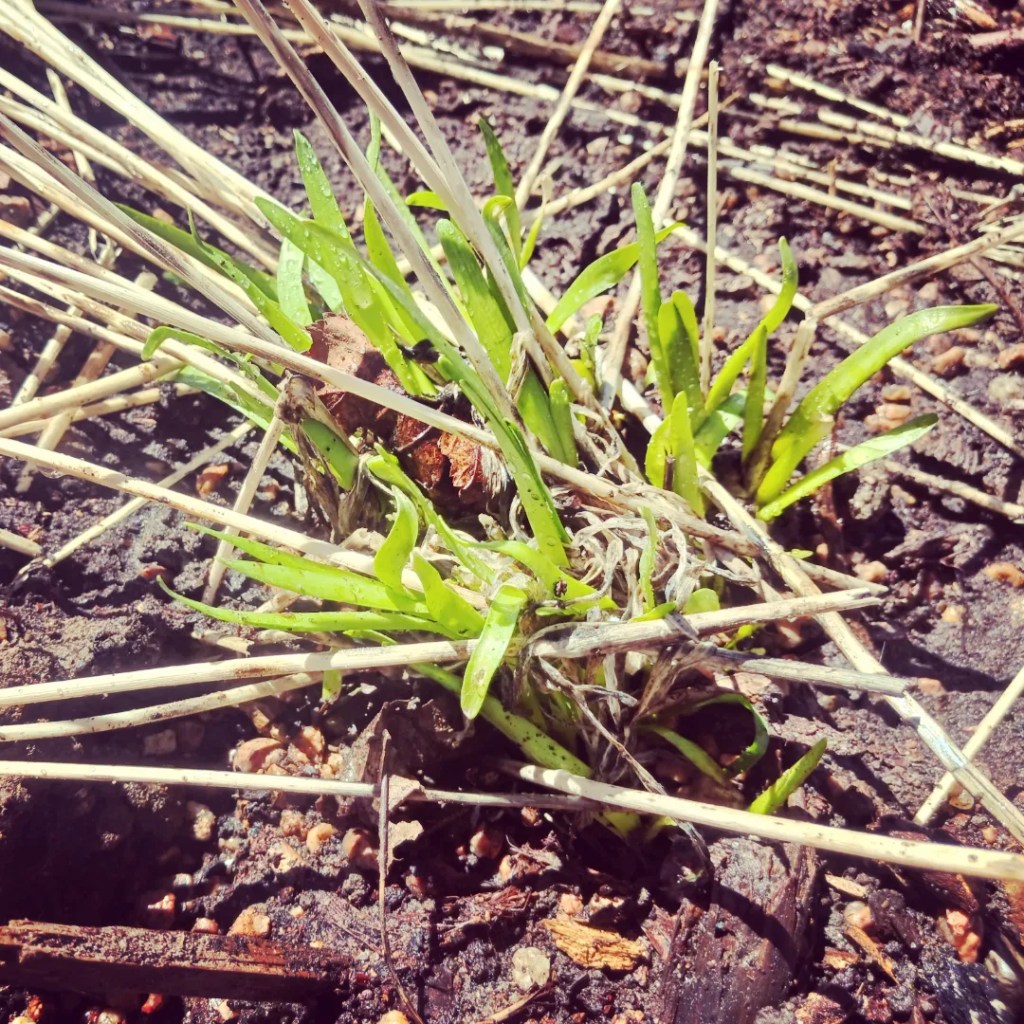
The fence also acts as a barrier, to disrupt a direct path into the garden by approaching dogs. The sidewalk side of the fence is installed right along the edge of the sidewalk, but there is enough room on the street side of the box to access the garden. We discovered that allium plants like onion were used along the Underground Railroad to hide scents and confused or repelled dogs, so we started by planting varieties that could thrive in a no-added-water steppe garden. Garlic chives and chives were among the first plants to go in. We intend to add the native prairie and nodding onions to the collection.
We also thought of how dogs were used in attempts to curtail civil rights. We remembered stories that Grace Stiles told of growing up in Texas not liking dogs because so many were trained to be aggressive towards African Americans. We felt this was part of the reason she likes cactus as one of her favorite plants, so we planted native prickly pear and cholla to honor Grace while helping keep dog noses on track to stay out of the garden.


 VOICES