Creature Conserve supported Artist-in-Residence,
Daniela Jules Garza transforms thistle into medicine and art.
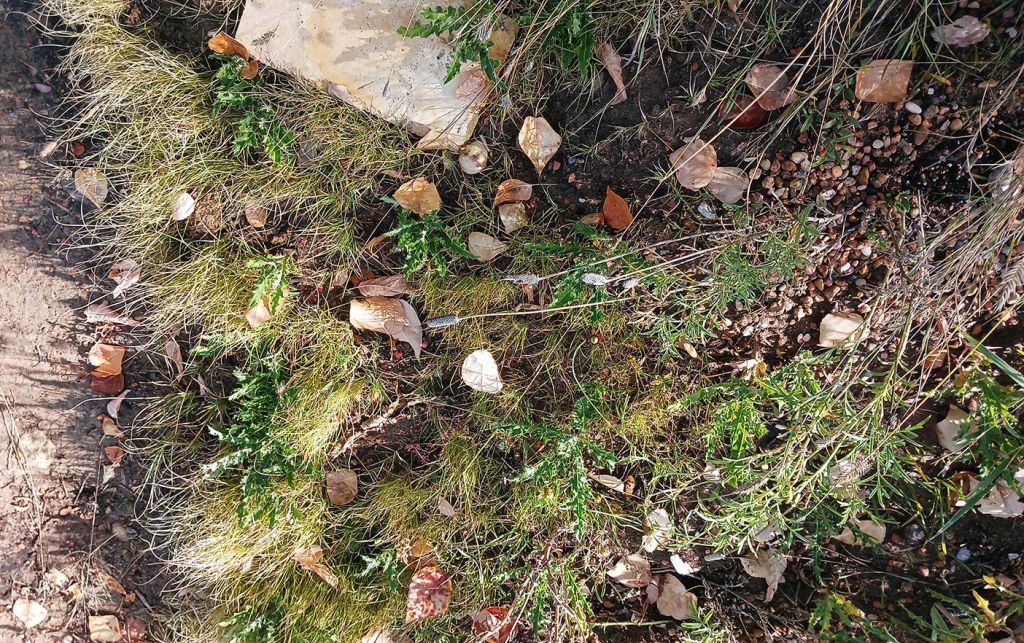
we were sowing in native grasses (in this area, Bouteloua gracilis or Blue grama) & native flora like Ratibida columnifera and various penstemons
The pasture grasses that had taken over were dug out in the spring, but come August, thistle were taking happy hold of this particular space & would out-compete the wee flora.

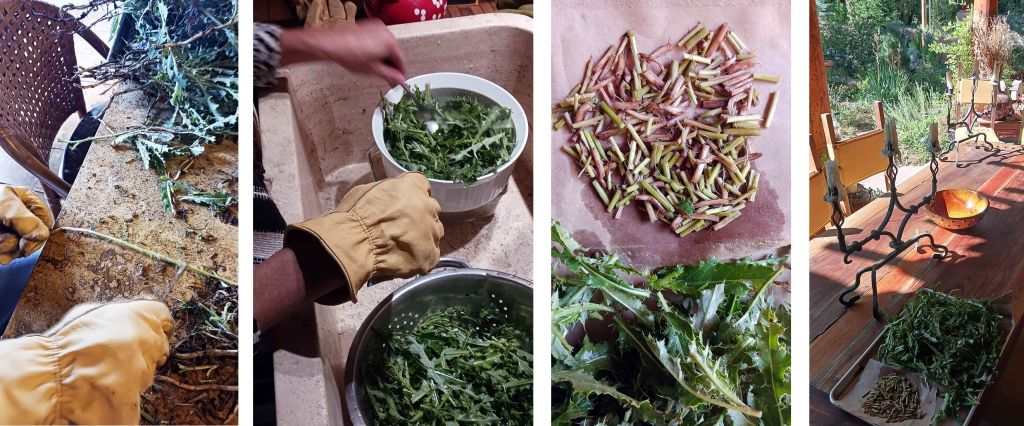
What is Thistle good for, anyway?
Daniela loves being surprised when poked by Thistle. While at the TAOS distillery, she taught us in the Wise Woman tradition of herbalism, how to prepare this common plant that grows readily at our feet. Daniela teaches us to re-cognize the strength and fortitude of plants that are dismissed as unwanted ‘weeds’ & processed the young thistle plants that were being weeded out of the garden. Paying attention to the current growth stage of the plant, we harvest the parts into which the plant is putting most of its energy. The leaves and stems make a strong medicinal tea that is cleansing for the liver, so this is how Daniela processed these particular, young plants when we found them in early August. She notes that plants often emerge and offer their medicine at a time of the year when our bodies need it. Thistle and Nettle both emerge in the early spring, when our bodies need to be revived with a cleansing tonic after the cold winter months. Leaves should be harvested before the biannual plant starts blooming, since the plant then transitions its energy into producing pollen and seeds. At home in Switzerland, where most gardeners will cut back the entire plant to harvest it, Daniela cuts her leaves in a way that still allows the plant to bloom as she values the seeds as part of her diet as well. If the tea offers a cleansing medicine, then the seeds offer a nourishing variation that includes the medicine as well as all the protein and potential of the plant in a compact, nutrient rich form.
It is important to use an unfamiliar plant sparingly at first so we can pay attention to how our bodies respond. Thistle can cause allergic reactions and is considered toxic by some. Tea is more mild and a good entry point. Adding just a few seeds to top our salad or yogurt is an option to add it into our food, but don’t eat too many at once. As with any food, it is best consumed in season.
Working with the seasonality of plants is a wonderful opportunity to get to know species on a very foundational level. Starting by harvesting leaves and stems for tea, we continue through the season by observing the floral feasts offered by the maturing flowers to the pollinators. As the seedheads ripen, we share in the harvest with the birds, with the nutrient dense seeds nourishing us both.
Making ART with Thistle
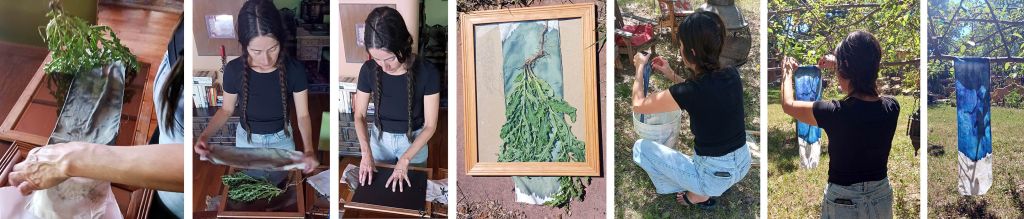
we make cyanotypes in the garden with the remaining thistle plants before composting them.

Printed over anthotype created at Green Olive Arts in Tetouan, Morocco in 2022
Re-Valuing THISTLE
Many of our conversations with Daniela centered on how we as a society value plants. Using the idea that every plant has a gift, we explored common judgments placed on plants as well as expectations on how we should garden. Uncovering traditional uses for under-valued plants allow us the space to re-consider our own relationship with them. Creating artworks with plants like thistle invites viewers to assess their own sense of value and suggests ways in which we may tap into the nourishing traditions provided by the plant, so that when we find them growing happily in our spheres, we may work with them in ways that benefit our bodies and the ecological circles within our gardens.
Blooming thistles are pollinator powerhouses, providing pollen & nectar for skippers, swallowtail & monarch butterflies, bumblebees and hummingbirds. The seeds are protein rich food for birds and some, like the goldfinch, love using the seedfluff to line their nests. When choosing thistles for our gardens, it is important to realize that native varieties offer the most benefit for local ecologies.

Thank you Creature Conserve for supporting this residency
Please note that this does not constitute medical advice and we are not responsible for your explorations with this plant.
 VOICES