
As we work to improve habitat in our yards, it is vital to think about underground networks of life.
Expanses of grass lawns are akin to cement surfaces as far as soil health goes. Kentucky bluegrass has very shallow roots, which is why many people aerate, leaving little clay turds in their wake in an attempt to create space for more water to penetrate the shallow mat of turf. Here in Denver, we inhabit an ancient lakebed which has left us with heavy clay soils, making it extra hard for water to penetrate the soil. I started digging into our front lawn slowly so as not to alarm the neighbors as we steadily replace our lawn with native and xeric plants. At first, as my spade cut into the soil, it met dense clay with no apparent life within.
Slow Gardening
We started quietly restoring the soil in the fall. The first year, we laid cardboard as skirts around our oak trees, raked all of the fallen leaves atop the cardboard, wetting and stomping them so they would not blow away. For a tidier appearance and an added layer of wind protection, mulch may be used as a top dressing. Over the winter, the cardboard skirts around the trees had a chance to smother the grass and disintegrate into the soil. The following spring, we planted a selection of shady groundcovers and low evergreens through the cardboard to start shaping the beds. As my shovel gently turned the decaying leaves, we found the delicate strands of mycelium creeping the organic matter and it was TEAMING with life; worms, centipedes, grubs and the like. This is vital spring food for baby birds and we were so pleased they returned in such a short amount of time. These ‘decomposers’ are also breaking down the leaves and mulch into a nutrient rich and naturally aerated soil that enlivens the connections between roots and microbiota that are essential foundations for life in our gardens.
It is estimated that if we leave our leaves to decay, we capture 32% more carbon than by disposing of them, according to the Homegrown National Park. By sinking it into the soil, we nourish plants and soil biota to help them thrive while curbing emissions. It is common to utilize either wood or rock mulch in garden beds, but we should stay mindful that these materials are mined and shipped from faraway places, adding a large carbon footprint to conventional practices. Trees are most nourished by their own fallen leaves, and the leaves protect the huge array of pollinators that overwinter here.
Not only trees, but forb plants love their own material to nourish the soil around them. Instead of cutting back plants as they dry in the season, remember that seeds provide essential forage for migrating birds. Hollow stems and bunching bases of plants provide warmer grounds for pollinators during the freeze. Increasing habitat calls for a slow approach to provide for local wildlife. We tidy up the front areas of our garden by skirting leaves around trees, shrubs and underneath established plants in the back portion. My favorite is refreshing these leafy blankets as the nitrogen rich oak leaves fall later in the winter. They have such a lovely color and form. Wait until late spring to clean up, and even then, we try to leave all materials in the landscape to allow last year’s growth to build up next years’ soil.
Fall is for PLANTING
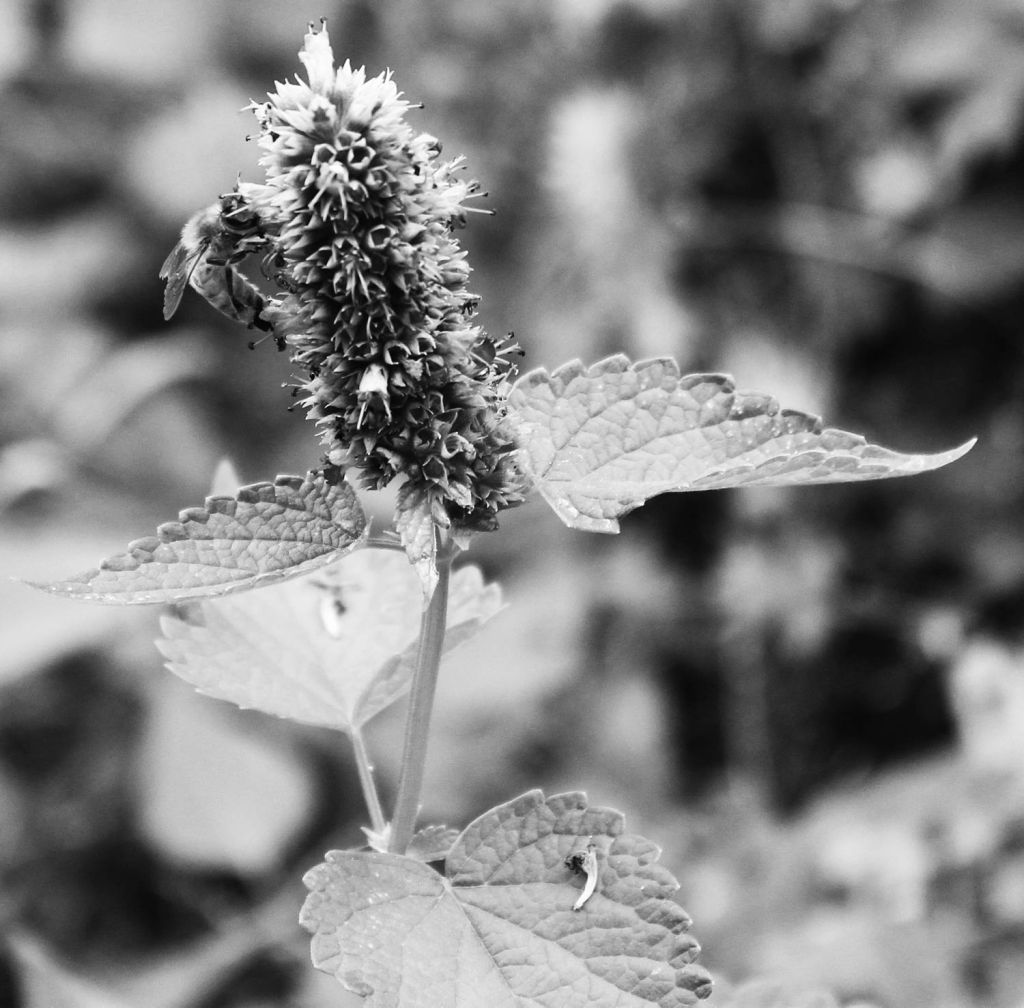
The best approach of reducing weeds in our gardens is to use a living mulch of the plants themselves. Plant ‘petal to petal’ to encourage plants fill entire gardens. Open ground invites weeds, so this approach of filling in open spaces reduces the amount of active tending needed to maintain the garden. Wildflowers are notoriously wild looking when scattered about, to formalize their appearance, we sow circles of beebalm, echinacea & penstemon with generous cover of seed. Protecting the seed with coarse sand or squeegee marks where we’ve planted. As they are slow-growers, we can recognize what should be growing by the uniformity of the small leaves, then pull any singular aggressive weeds. It often takes two years for native seeds to flower, focusing the first year on sending energy into their roots, which help penetrate the dense soil. It is the most cost-effective way to add genetic diversity to the collection of plants in our gardens. Western Native Seed (https://www.westernnativeseed.com/) & Granite Seed (https://graniteseed.com/) companies are great sources for native plant seeds for plants that can be surprisingly uncommon in nurseries (even though they are so valuable for the landscape.)
Once the plants are established and throwing seeds of their own, ‘weeding’ the new plants from unwanted areas is a great opportunity to share valuable plants with friends and neighbors while expanding pollinator pathways through our neighborhood. Fall is a great time for planting, and fall is the time that first year native plants are making themselves known. We begin to familiarize the leaves of the plants to recognize them before their bloom. Transplant scattered natives with their own kind for a more formal appearance, or simply let them dance around the garden of their own accord for a more wild place. Ultimately, some will become more aggressive and threaten to take over a diverse collection of plants. I like to transplant these to fringe gardens beyond the reach of any sprinkler…or share them with neighbors who are looking to fill in their gardens with pollinator power houses also known as native plants.
 VOICES